Harmful Algal Blooms and Ohio Drinking Water Advisories
Harmful algal blooms can raise questions about whether Ohio tap water is safe to drink, whether boiling helps, and which household activities need alternate water. The key is to follow the specific drinking water advisory issued for your supply. This article explains what the advisories mean, which uses they cover, and where to look for reliable updates.
What a harmful algal bloom drinking water advisory means
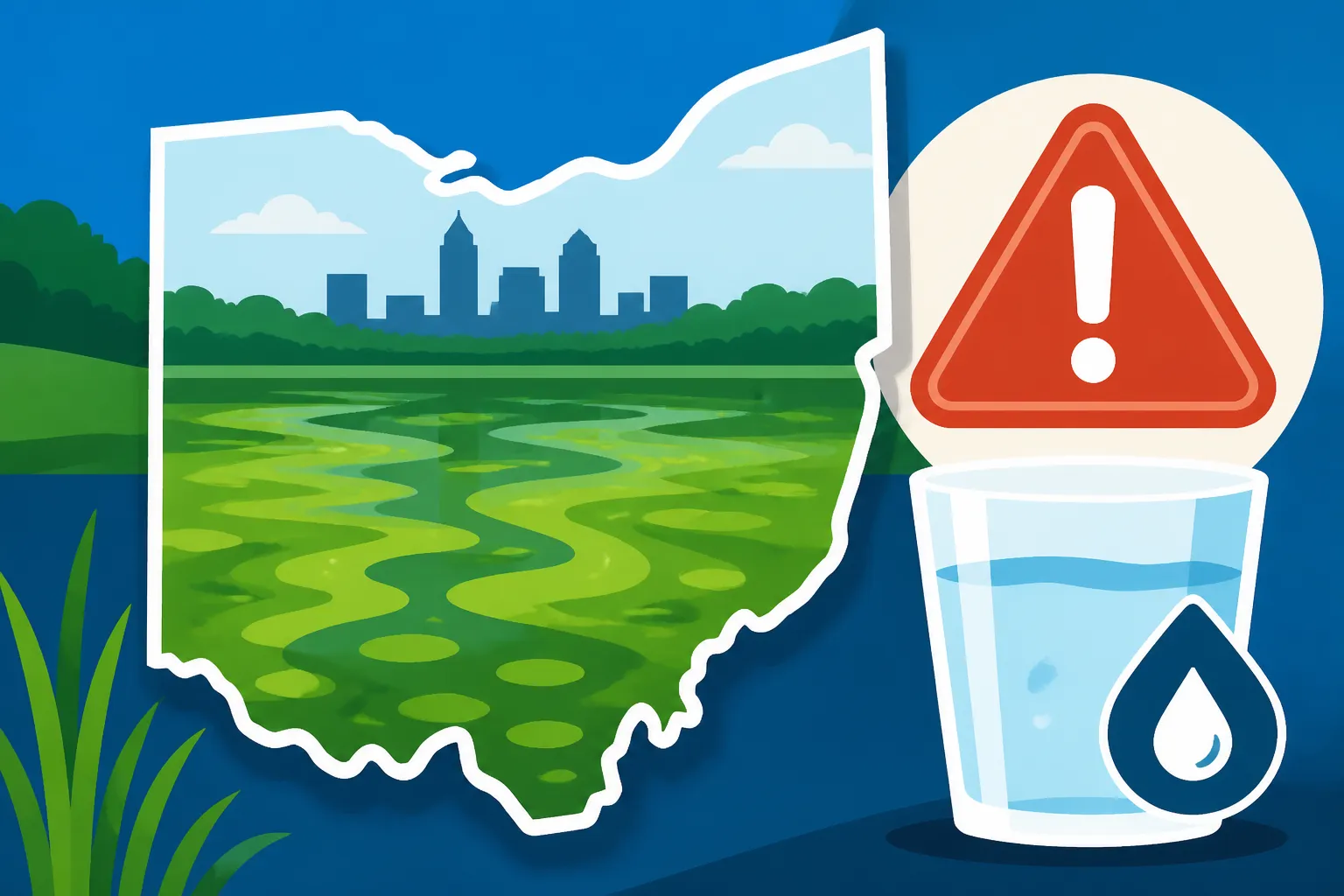
A harmful algal bloom, often shortened to HAB, is a growth of algae or cyanobacteria in water. Some blooms can produce cyanotoxins. A bloom in a lake or reservoir is not, by itself, the same thing as a drinking water advisory for finished tap water. The relevant question for customers is whether cyanotoxins have been found at levels that prompt an advisory in water supplied to the public.
Ohio public water systems issue two types of drinking water advisories depending on the level, according to the Ohio Department of Health. Advisory levels are determined from sample results: the Ohio Department of Health describes them as levels of cyanotoxins from water sample results used to issue an advisory. In other words, a notice about a drinking water supply is based on water testing, not simply on whether someone can see algae on a lake.
A notice may apply to certain groups of people or to children and adults more broadly. Those categories matter because the recommended uses of alternate water differ. Read the actual notice rather than relying on a headline, a neighbor’s summary, or an old message from a different area. Check the advisory’s stated audience, the affected water system or area, and any instructions about how to use water.
A drinking water advisory is also different from a recreation warning about swimming, fishing, or contact with a lake. The two notices concern different situations. If you are unsure whether a notice concerns drinking water from your tap or recreation at a nearby waterbody, check with the issuing water system or local health department. The Ohio’s Two Kinds of Algal Toxin Drinking Water Advisories, Explained article provides more detail on how the advisory categories differ.
Your water source can help explain why local notices vary. Some Ohio communities treat water from surface sources, while others receive water from different sources or suppliers. A nearby bloom does not automatically mean every Ohio tap is affected. To understand where a community gets its water, see Where Ohio Communities Get Their Drinking Water. For a broader starting point on public water reports and common concerns, see Ohio Tap Water Guide: Sources, Safety Reports and Common Problems.
The two advisory types and who should use alternate water
The advisory type determines who should use alternate water and for which activities. Avoid assuming that a notice has the same directions as another advisory you have seen. Follow the wording from the water system and the Ohio Department of Health.
| Advisory audience | Uses that call for alternate water | Key point |
|---|---|---|
| Children under six and sensitive populations | Drinking, food preparation, infant formula, toothbrushing, and making ice | Use an alternate water source for the uses named in the advisory. |
| Children and adults | Drinking, including for pets, infant formula, ice, toothbrushing, and food preparation | This advisory includes a broader group and explicitly includes pets. |
| Healthy individuals during an advisory | Washing hands, bathing, washing dishes, and laundry | The Ohio Department of Health says healthy individuals may continue to use the water for these activities. |
Advisory for children under six and sensitive populations
For an advisory aimed at children under six and sensitive populations, the Ohio Department of Health says an alternate water source should be used for drinking, food preparation, infant formula, toothbrushing, and making ice. Its guidance says bottled water, should be used when drinking, preparing food. The important practical point is to use alternate water for the specific activities listed in the notice, not only for filling a drinking glass.
Food preparation can include using water as an ingredient or for tasks that put water in contact with food. Ice is also covered: if the advisory names making ice, do not assume that water frozen in a household freezer is exempt. For infant formula, use alternate water as directed by the advisory. If the notice does not answer a particular question about preparing formula or food, ask the water system or local health department for instructions.
The term “sensitive populations” may not be familiar to everyone, and a short notice may not explain who it includes. Do not try to decide on your own whether a person belongs in that group based on a general description online. Check the advisory itself and seek guidance from the local health department or a medical professional if you need advice about an individual’s health situation.
Advisory for children and adults
The broader advisory applies to children and adults. The Ohio Department of Health says alternative water should be used when drinking, including for pets, and also for infant formula, ice, toothbrushing, and food preparation. Because pets are explicitly included, do not assume that tap water is suitable for an animal to drink just because the animal is not a person.
An advisory for children and adults does not necessarily mean that every household use of tap water is prohibited. The Ohio Department of Health says healthy individuals may continue to use the water for washing hands, bathing, washing dishes, and laundry during a drinking water advisory. Still, read the notice for any additional instructions, particularly if it addresses a group or use not covered by the general guidance.
If the notice says “children and adults,” do not narrow it based on your own interpretation. If it says “children under six and sensitive populations,” do not assume that the broader advisory applies. Knowing exactly which advisory was issued helps prevent both underreaction and unnecessary changes to activities that the notice says can continue.
Which household activities are covered
During an advisory, the most useful way to make decisions is to sort activities by whether they involve drinking, food, or another use listed in the notice. When a use is explicitly covered, follow the alternate-water instruction. When it is not clear, use the official notice and ask the issuing water system or local health department rather than guessing.
Uses that call for alternate water
The Ohio Department of Health’s guidance identifies drinking, food preparation, infant formula, toothbrushing, and ice among the uses that require alternate water, with the audience depending on the advisory type. For a children-and-adults advisory, the guidance also explicitly includes pets’ drinking water.
This can affect routine tasks throughout the day. Think beyond a glass of tap water: water may be used to prepare a meal, make ice, or brush teeth. If you are providing water to a pet, check whether the advisory applies to children and adults; that advisory specifically includes pets. If a household member needs a particular instruction that is not clear in the notice, contact the water system or local health department.
The advisory directions do not give permission to substitute a home treatment device or a different source without checking that it is suitable for the situation. Do not assume a pitcher, faucet device, refrigerator dispenser, or other treatment unit makes the water appropriate for a use covered by the advisory. Follow official instructions about alternate water and ask the issuing authority if you are uncertain about your particular setup.
Uses that healthy individuals may continue
The Ohio Department of Health says healthy individuals may continue to use the water for washing hands, bathing, washing dishes, and laundry during a drinking water advisory. This distinction can make an advisory easier to manage: an instruction to use alternate water for drinking and food-related uses is not automatically an instruction to stop every household water activity.
That guidance is specifically worded for healthy individuals. Do not extend it to a person or circumstance that the notice treats differently. If someone in the household is part of a group named in the advisory, or has a health-related question about bathing or another use, ask the local health department or a medical professional for advice.
The table below is a practical summary, not a replacement for the advisory. A notice can include additional directions or explain a local situation. Read it in full, including any updated messages from the water system.
| Household activity | What to do during the advisory |
|---|---|
| Drinking tap water | Use alternate water when the advisory identifies the person or group. |
| Preparing food | Use alternate water when this activity is covered by the advisory. |
| Infant formula | Use alternate water as directed by the advisory. |
| Toothbrushing | Use alternate water when this activity is listed. |
| Making ice | Use alternate water when this activity is listed; do not assume frozen tap water is outside the instruction. |
| Giving water to pets | Use alternate water during an advisory for children and adults, which includes pets. |
| Washing hands, bathing, washing dishes, or laundry | The Ohio Department of Health says healthy individuals may continue these uses during an advisory; follow any more specific notice. |
If an activity is not mentioned in the notice or general guidance, avoid treating silence as proof that every approach is appropriate. The utility or health department can clarify how the advisory applies. For general context on how water notices differ, see Boil Water vs. Do Not Drink: Ohio Water Notices Compared.
Why boiling is not the answer
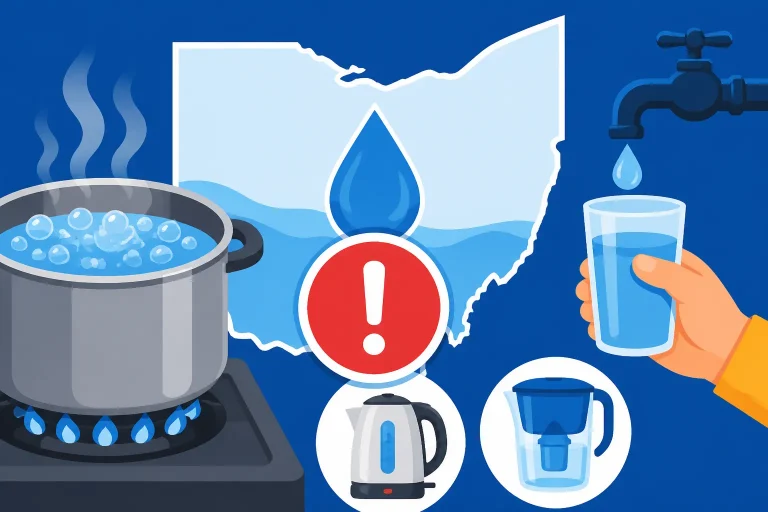
The Ohio Department of Health says, Do not boil the water during any advisory. It also states that boiling water will not remove HAB toxins. Boiling therefore is not a substitute for alternate water when an advisory calls for it.
This can be confusing because people may associate boiling with some other kinds of water notices. A boil-water advisory and a cyanotoxin drinking water advisory do not have the same purpose or directions. Do not apply the instructions from one notice to another. If a cyanotoxin advisory is in effect, follow its directions and do not boil the water as a way to make it suitable for drinking, food preparation, toothbrushing, or any other restricted use.
Boiling also should not be treated as a precaution that makes uncertain water safe. The key instruction from the Ohio Department of Health is that boiling will not remove the toxins. If you need a substitute for an activity covered by the advisory, use the alternate water source specified by the notice or contact the issuing water system for guidance.
Some household filters and treatment devices are designed to reduce particular contaminants, but an advisory is not the time to assume that a device handles cyanotoxins. Product claims and certifications vary, and the right choice depends on the contaminant and water conditions. Do not use a filter as a replacement for the advisory’s instructions unless the relevant public health or water authority specifically advises that it is appropriate. For another explanation focused on this point, see Boiling Won’t Remove Cyanotoxins From Ohio Tap Water.
A cyanotoxin advisory should also not be confused with an instruction to boil water because of a pressure loss or other system event. If you receive more than one notice, follow the instructions that address each situation and contact the water system if they seem inconsistent. How Boil-Advisory Alerts Reach Customers of Ohio Utilities explains how boil-advisory messages reach customers, while Boil Water vs. Do Not Drink: Ohio Water Notices Compared helps distinguish the wording and purpose of different notices.
How to check an advisory and respond
When you hear about a possible bloom, start by confirming whether there is a drinking water advisory for your water supply. A social media post, a photo of a lake, or a notice from a neighboring community may not establish whether your tap is affected. Find the latest notice from the water system that serves your address, and check with the local health department if you need help interpreting it.
Read the notice, not only the headline
Headlines often shorten a notice to a phrase such as “water warning” or “algae advisory.” The full notice should tell you whether it concerns drinking water, recreation, or another issue. It should also state the advisory audience and the uses for which alternate water is recommended.
Check whether the notice is specifically for children under six and sensitive populations or for children and adults. The distinction affects who should use alternate water, and the broader guidance expressly includes pets. Keep the notice available so household members, caregivers, and anyone preparing food can follow the same instructions.
If you receive a forwarded notice, verify that it is current and applies to your water system. A neighboring system may have a different source, a different sample result, or a different advisory status. Do not assume that a notice for a nearby town applies to your address—or that it does not—without checking with the appropriate water system.
Use alternate water for the named activities
Once you confirm that an advisory applies, follow its instructions for drinking and other covered uses. Keep the directions practical and visible for people who may not have seen the original notice. Make sure those handling food, preparing infant formula, filling ice trays, or providing drinking water to pets know which source to use.
Do not boil water to try to remove HAB toxins. The Ohio Department of Health specifically says not to boil water during any advisory and that boiling will not remove the toxins. Do not assume that tap water becomes suitable for a restricted use after sitting, chilling, passing through a household dispenser, or being used to make ice. If you have a question about one of these situations, ask the water system or local health department.
Ask for clarification when instructions are unclear
A notice may not answer every household question. For example, it may not explain a specific use of water or how the advisory applies to a particular person’s circumstances. Rather than interpreting the notice beyond what it says, contact the water system that issued it or the local health department. Use the official agency or utility website to find current contact details.
If you are concerned about a possible health effect or someone feels unwell, contact a medical professional or local health department. This article cannot assess an individual’s symptoms or determine whether an exposure occurred. The important immediate step is to follow the official water-use instructions and seek appropriate professional guidance for health questions.
A simple household checklist can help keep the response focused:
- Confirm that the notice is a drinking water advisory and that it applies to your supply.
- Identify which advisory audience the notice names.
- Use alternate water for the activities covered by that advisory.
- Do not boil the water to remove HAB toxins.
- Check for updates from the water system and ask the local health department about unresolved questions.
What to do while the advisory is in effect and afterward
A drinking water advisory is a changing public notice. Its instructions apply while it is in effect, so keep checking the source that issued it for updates. Do not rely on an old screenshot, a past message, or an informal report that the advisory has ended. Look for a clear update from the water system or relevant public health authority.
During the advisory, follow the directions for the specific audience and uses named. The Ohio Department of Health says alternate water should be used for drinking and listed food-related activities, with the applicable instructions depending on the advisory type. It also says healthy individuals may continue to use the water for washing hands, bathing, washing dishes, and laundry. If the notice gives more specific instructions for the local situation, follow those instructions.
When an advisory is lifted, follow the official update about what customers should do next. Do not infer that the restriction has ended just because the water looks, smells, or tastes normal. Appearance and taste are not a substitute for a notice about cyanotoxin sample results. Likewise, the end of one advisory does not answer unrelated questions about water quality, plumbing, or other contaminants.
If you want to review routine information about your public water supply, a Consumer Confidence Report can provide context about the system’s water quality reporting. It is not a live advisory feed, however, and it should not replace current notices. For help finding and understanding that type of report, see How to Find and Read Consumer Confidence Reports in Ohio and How to Read the Detected Contaminants Table in an Ohio CCR.
A useful distinction is:
- A bloom report describes a condition in a waterbody.
- A drinking water advisory gives instructions for use of water supplied to customers.
- A routine water quality report summarizes information on a reporting schedule and may not reflect a current advisory.
These are related subjects, but they answer different questions. When the question is whether to drink or use tap water during a suspected bloom, rely on the current advisory from the water system and the Ohio Department of Health’s guidance. When the question is about personal health, ask a medical professional or local health department.
Frequently Asked Questions
Does every harmful algal bloom mean Ohio tap water has an advisory?
No. A visible bloom in a lake or reservoir does not by itself establish that a drinking water advisory applies to tap water. Ohio public water systems issue advisories based on cyanotoxin levels in water sample results. Check the current notice from the system that serves your home.
Can I boil tap water during a cyanotoxin advisory?
No. The Ohio Department of Health says not to boil water during any advisory and explains that boiling water will not remove HAB toxins. Use alternate water for the activities covered by the notice.
Can I bathe or wash dishes during an advisory?
The Ohio Department of Health says healthy individuals may continue to use the water for washing hands, bathing, washing dishes, and laundry during a drinking water advisory. Follow the specific notice and ask the local health department if you have a question about an individual circumstance.
Does an advisory for children and adults include pets?
Yes. The Ohio Department of Health says alternative water should be used for drinking, including for pets, during an advisory for children and adults. Follow the notice for other covered uses as well.
Sources
- Ohio Department of Health — HAB Advisories in Ohio (checked November 13, 2026)
Disclaimer
This article is for general informational purposes only and does not constitute professional advice. Laws, prices and regulations vary by location and change over time. Consult a qualified professional for guidance on your specific situation. Ohio Water Guide is not a government agency or water utility and is not affiliated with any public water system.