Boil-Water Advisories in Ohio: How They Work and How to Respond
A boil-water advisory can disrupt drinking, cooking, brushing teeth and everyday routines, and the notice may not reach every person who needs it. Knowing what the instruction means, how to check whether it covers your address and what to do until it ends helps you make safer choices without guessing.
What a boil-water advisory means
A boil-water advisory is an instruction to take an extra precaution with tap water. It tells people covered by the notice to boil water before using it for the purposes listed there, or to use another source the notice says is acceptable. It is not the same as an all-clear, and it is not interchangeable with a do-not-drink notice.
Ohio EPA explains that when a system doesn’t meet a standard, consumers are notified. That notification is a reason to follow the directions carefully, but it does not tell you, by itself, exactly what caused the advisory or what uses are affected. The utility’s notice should spell out the immediate action to take and how to get updates.
An advisory can be issued as a precaution while a water system responds to a concern. A notice alone does not establish that every home has the same exposure, nor does it prove that the water is safe for uses the notice does not address. Avoid drawing conclusions from a neighbor’s experience, an earlier advisory or a social media post. Check the current notice for the affected area and the specific instructions.
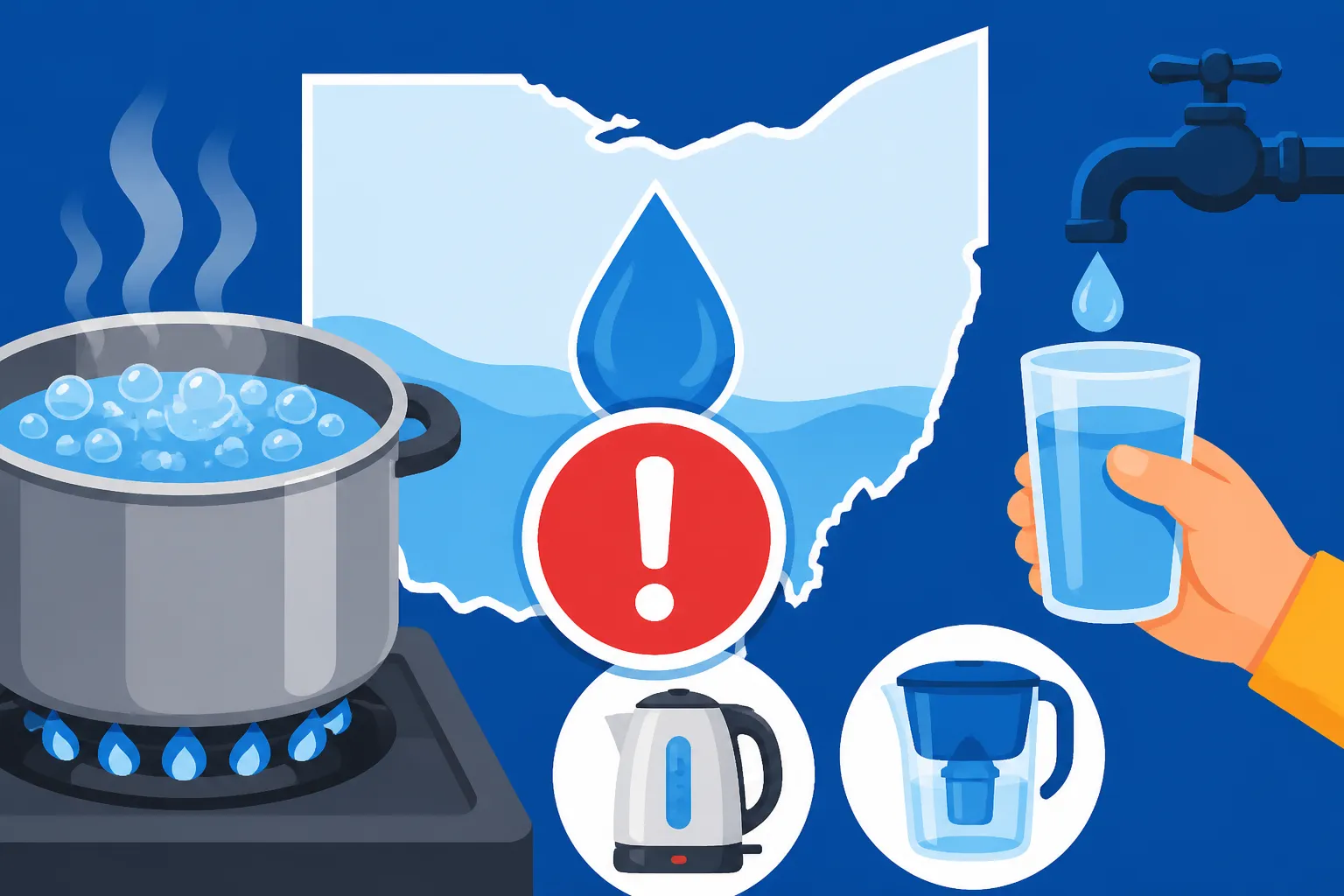
When an advisory tells you to boil water, Ohio EPA’s direction is: Boil your water before using. The notice may provide additional instructions, such as which uses require boiled water, whether bottled water is an option and where updates will appear. Follow those instructions rather than relying on a general rule of thumb. If the notice does not explain a use you need to know about, ask the water supplier or local health department.
It also helps to distinguish the type of notice:
| Notice or message | What it generally means for your next step |
|---|---|
| Boil-water advisory | Follow the stated directions for boiling water or using an approved alternative for the listed purposes. |
| Do-not-drink notice | Do not assume boiling makes the water suitable to drink. Follow the notice’s specific directions. |
| Do-not-use notice | Avoid the uses named in the notice until the water supplier says otherwise. |
| Advisory lifted or all-clear | Confirm that the update applies to your address and check for any instructions about flushing or other steps. |
The exact wording matters. If a notice says not to drink the water, do not treat it as a boil-water instruction unless the supplier explicitly says boiling is appropriate. For a fuller comparison, see Boil Water vs. Do Not Drink: Ohio Water Notices Compared.
What to do as soon as you hear about an advisory
Start by confirming the notice is current and that it applies to your location. A boil advisory may cover only part of a service area, while a message shared online may leave out boundaries or follow-up details. Look for an official notice from your water supplier, and use the supplier’s official website to find current contact details if something is unclear.
Once you confirm that the advisory covers your address, use this sequence to organize your response:
- Read the full notice. Check the affected area, the uses mentioned, the recommended alternative to boiling and any directions for appliances or plumbing.
- Set aside water for immediate needs. Use water prepared according to the notice, or bottled water if the notice allows it. Keep it separate from untreated tap water so it is easy to tell which is which.
- Pause uses you have not checked. Do not assume that an appliance, food preparation task or household routine is covered just because drinking water is mentioned.
- Tell other people who use the water. Include household members, visitors, caregivers and anyone who might prepare food or drinks in the home.
- Watch for updates. Keep checking the supplier’s official updates for changes to the affected area, instructions and the all-clear.
- Ask when an instruction is missing or confusing. Contact the water supplier or local health department through its official website for current contact details.
The instruction to boil water applies before use, not after you have already used untreated tap water for a purpose named in the notice. Do not assume that boiling a drink after it has been prepared with untreated water addresses every concern. Follow the order and method described by the supplier.
If you are unable to boil water or do not have a reliable way to do so, check whether the notice identifies bottled water or another alternative. Avoid inventing a workaround, such as relying on a pitcher filter, a refrigerator dispenser or an appliance setting, unless the notice or supplier confirms it is suitable for the situation.
If the water is already off, the tap is sputtering or the pressure has changed, check for a supplier update rather than assuming the advisory has ended. Changes in service can be part of the event that led to a notice, but only the current official information can tell you whether your area is included. For the connection between service problems and notices, see Main Breaks, Pressure Loss and Boil Advisories in Ohio.
Which household uses need attention
People often think first about a glass of water, but an advisory can affect several routines. The notice is the authority on which uses require boiled water or an alternative, so check it before deciding what is safe to do. The table below is a practical prompt for reviewing common uses, not a substitute for the supplier’s directions.
| Household use | What to check |
|---|---|
| Drinking | Follow the notice’s boiling or alternative-water instructions before drinking tap water. |
| Cooking and food preparation | Check whether the notice includes water used to prepare food, wash ingredients or make beverages. |
| Ice | Check whether ice made during the advisory should be avoided, and follow any instructions for an ice maker. |
| Brushing teeth | Check the notice rather than assuming that water used in the bathroom is outside its scope. |
| Making drinks or formula | Use the notice’s directions and contact a health professional or local health department with health-related questions. |
| Washing dishes | Follow specific directions for dishwashing methods and equipment; do not assume every cycle or setting is suitable. |
| Bathing and handwashing | Check whether the notice gives separate instructions for these activities, especially for people who may swallow water. |
| Pets | Follow the notice for water provided to animals; ask a veterinarian if you have a health concern about a pet. |
| Water-using appliances | Check instructions for refrigerators, ice makers, filters and other equipment rather than assuming they make water safe. |
Drinking, cooking and food preparation
For drinking and food preparation, rely on water that has been handled according to the notice or on an alternative the notice identifies. That includes uses that may be easy to overlook, such as filling a kettle, mixing a drink, rinsing food or preparing something that will not be heated afterward. If the notice names only certain uses, do not expand or narrow that list based on assumption; ask the supplier if you need clarification.
Some households have particular needs, including infant feeding, medical care or a person who may have difficulty following instructions. Do not try to resolve health questions from a general advisory notice. Ask a medical professional or local health department what precautions fit the person’s situation.
Ice, dispensers and appliances
Ice can be missed because it is stored out of sight. Check the notice for directions about ice already made, and check whether it says to stop using an ice maker or refrigerator dispenser. If the appliance has a filter, that does not automatically mean it can replace the advisory’s boiling instructions. A filter’s suitability depends on what it is certified and designed to reduce, and whether that matches the issue identified for your water. See NSF/ANSI Filter Certifications and How Ohio Agencies Rely on Them for help understanding what certification claims mean.
Bathing, handwashing and dishes
Do not assume every household activity has the same direction. The supplier may provide separate guidance for bathing, handwashing and dishwashing. Pay particular attention when someone might swallow water or when a notice gives special instructions for a specific activity. For a closer look at these questions, see Dishes, Showers, Ice and Teeth During an Ohio Water Advisory.
When a notice does not discuss a use you need to make, contact the supplier rather than treating silence as permission or as a prohibition. The answer may depend on the exact advisory and the affected system.
How to check whether the advisory covers your address
A notice is useful only if you can tell whether it applies to your home, workplace or other location. Service boundaries do not always match familiar neighborhood, city or mailing boundaries. Two homes close together may receive water from different systems, and a community may receive water through a supplier serving a broader area. Do not decide based only on a city name or a nearby street.
Check the notice for the named system, affected streets or neighborhoods, and any boundary description. If it gives a map, use the address or boundary details rather than judging by visual proximity. If the notice says the advisory applies to a particular zone, confirm which zone includes your address.
If you rent, share a building or live in a multi-unit property, do not assume a landlord, building manager or neighbor has already passed the message along. Check the supplier’s current notice yourself if possible, and ask the property manager whether the building has received an update. Renters who do not receive utility messages can find useful steps in How Ohio Renters Can Get Water Notices Without Seeing the Bill.
Alerts may arrive through more than one channel, but no single method is guaranteed to reach everyone in time. Check the supplier’s official website and available customer notices, and sign up for alerts if the supplier offers them. Ask household members to pass on any notice they receive, especially if the account holder is not the person who usually handles water decisions. For more on the ways utilities send alerts, see How Boil-Advisory Alerts Reach Customers of Ohio Utilities.
Be cautious with posts or screenshots that do not show when the information was issued, which system it concerns or whether a later update changed the directions. A message about a nearby community may not apply to your supplier. Likewise, an older advisory may have been lifted, while a new notice may not yet appear in a shared post. Use the utility’s official updates to verify the current status.
If you cannot determine whether your address is covered, contact the water supplier and describe the service address. Ask whether the advisory applies, which uses require boiling or an alternative, and where the next update will appear. Use the supplier’s official website to find current contact details. Avoid relying on an unofficial map or on a general answer that does not confirm your service area.
Managing the advisory at home
A little organization can prevent accidental use of untreated tap water. Put prepared or alternative water in a clean, clearly identified container, and keep it away from untreated water. Make sure everyone in the household knows which supply to use and where the current notice can be checked.
Consider the full routine of the household, not just meals. People may use tap water automatically for a quick drink, a pet’s bowl, a coffee maker, a toothbrush or a glass of ice. A short reminder near a sink or dispenser can help visitors and household members remember to check before using the tap. If children or guests are present, explain the rule in a way they can follow without needing to interpret the notice themselves.
Pay attention to equipment that stores or dispenses water. If a refrigerator, filter, plumbed coffee maker or other appliance connects directly to the water line, check the supplier’s instructions before using it during the advisory. Do not assume that a filter cartridge or appliance treatment makes untreated water suitable for every purpose. A product may be designed to reduce certain contaminants but not others, and the problem behind a particular notice may not match the product’s certification. If you have a separate concern about taste, odor or appearance, Ohio Tap Water That Tastes, Smells or Looks Wrong: Where to Begin explains how to approach that problem without confusing it with an advisory.
Boiling is not a universal answer to every kind of water concern. If the notice says do not drink or do not use, do not substitute boiling unless the supplier specifically instructs you to. For example, boil-water directions should not be treated as a solution to an algal toxin notice; see Boiling Won’t Remove Cyanotoxins From Ohio Tap Water. The safest response depends on the warning and the water system’s instructions.
If you need water for a use that is not addressed, write down the question and ask the supplier. Useful questions include:
- Does the advisory apply to this address or building?
- Which uses require boiling, and which can use bottled water or another alternative?
- Does the notice give separate instructions for ice, appliances, dishes or bathing?
- Where will the supplier post changes and the all-clear?
- Are there steps to take after the advisory ends?
These questions help you get a direct answer rather than relying on a general statement that may not match your home.
What to do when the advisory ends
Do not decide an advisory is over because the water looks clear, tastes normal or seems to be flowing as usual. Those observations do not confirm that the supplier has lifted the notice. Wait for an official all-clear that applies to your address and system.
When the supplier lifts an advisory, read the update from beginning to end. It may include next steps for household plumbing, ice makers or other equipment. Follow the supplier’s instructions about flushing taps or restarting appliances; do not assume that one step fits every home. If there are no after-advisory instructions and you are unsure whether equipment needs attention, ask the supplier.
An update may change the area covered without ending the advisory everywhere. Check the boundaries and affected system in the new message. If you received an earlier notice for a nearby area, confirm that the all-clear is for your service, not simply for a neighboring location. How to Tell Whether an Ohio Boil Advisory Covers Your Street can help you think through location details, while How Ohio Boil Advisories End and Where the All-Clear Appears focuses on finding the end notice.
After service interruptions or work on a water line, the water may look different for a while. Appearance alone does not tell you whether an advisory remains in effect. If the water looks, smells or tastes unusual after the all-clear, follow the supplier’s guidance and report the change through its official channels. See Discolored Water After an Ohio Service Interruption: How Long It Lasts for more context on that separate issue.
Keep the notice or a copy of its instructions until you have confirmed the all-clear and any follow-up steps. If someone in the household was away, let them know the advisory has ended only after checking the official update. If they used water while the advisory was active, do not attempt to diagnose a health outcome yourself. Ask a medical professional or local health department about health-related concerns.
Common mistakes to avoid
Treating every notice as the same
A boil-water advisory, do-not-drink notice and do-not-use notice are different instructions. Do not assume boiling is appropriate for all of them. Read the exact notice and use the action it specifies.
Assuming a nearby address is included
Service areas can be more complicated than municipal boundaries. Check the affected area and confirm your service address with the supplier when it is unclear. A neighbor’s update is useful only if the same system and advisory apply to both homes.
Relying on a product instead of the notice
A pitcher, faucet filter or refrigerator filter is not automatically a substitute for boiling. Products have different capabilities, and the notice is based on the system’s specific situation. Use a treatment product only if the supplier or appropriate professional confirms that it is suitable for the concern and intended use.
Stopping precautions before the all-clear
Normal-looking water or a lack of new messages is not the same as an official end notice. Keep following the advisory until the supplier confirms it has been lifted for your area.
Sharing an unverified update
Before forwarding a message, check that it is current, identifies the affected system and matches the supplier’s official information. If a notice is unclear, direct others to the supplier’s update rather than adding assumptions about the cause or boundaries.
Frequently Asked Questions
Does a boil-water advisory mean the water is contaminated?
Not necessarily. A notice tells you what precaution to take; it does not, by itself, explain the cause or establish the condition at every tap. Follow the supplier’s current instructions and ask the supplier if you need details about the advisory.
Can I use a water filter instead of boiling?
Do not assume so. A filter is designed or certified for particular reductions, and that may not match the concern behind the notice. Follow the advisory unless the supplier explicitly confirms that a specific alternative is acceptable.
Can I keep using the water once it looks normal?
Do not use appearance as an all-clear. Wait for an official update that confirms the advisory has ended for your service area, then follow any instructions included in that update.
Who should I contact if the notice does not answer my question?
Contact your water supplier for instructions specific to the advisory and address. For health-related questions, ask a medical professional or local health department. Use the supplier’s or agency’s official website to find current contact details.
Sources
- Ohio Environmental Protection Agency (checked November 13, 2026)
- Ohio Environmental Protection Agency — Understanding Public Water Systems (checked November 13, 2026)
Disclaimer
This article is for general informational purposes only and does not constitute professional advice. Laws, prices and regulations vary by location and change over time. Consult a qualified professional for guidance on your specific situation. Ohio Water Guide is not a government agency or water utility and is not affiliated with any public water system.